


Money touches nearly every decision you make—where you live, what you eat, how you spend your weekends, and whether you sleep peacefully at night. Yet most of us leave school without the faintest clue how to manage it. Financial planning isn't about spreadsheets and sacrifice; it's about freedom, choices, and peace of mind.
What Is Financial Planning, Really?
At its core, financial planning is simply matching your money to your life goals. It answers three questions:
Where am I now?
Where do I want to be?
How do I get there?
It's not just for the wealthy or the spreadsheet-obsessed. Whether you earn ₹25,000 or ₹2,50,000 a month, a plan helps you make that money work for you instead of slipping through your fingers.
Why It Matters in Daily Life?
1.It Turns Chaos into Clarity
Without a plan, money decisions are reactive. The rent is due, so you pay it. A sale pops up, so you buy something. An emergency hits, and suddenly you're borrowing.
With a plan, you know exactly:
- How much you can spend guilt-free
- What's already set aside for bills
- How close you are to that trip, gadget, or down payment
"Financial peace isn't the acquisition of stuff. It's learning to live on less than you make." — Dave Ramsey
2.It Builds an Emergency Safety Net
Life is unpredictable. Job loss, medical bills, car repairs—these don't send calendar invites.
Example: Priya, a graphic designer, lost her freelance clients overnight during a market slowdown. Because she had three months of expenses saved, she had breathing room to find new work instead of panic-accepting the first low-paying gig.
Rule of thumb: Aim for 3–6 months of essential expenses in a liquid savings account.
3.It Makes Big Dreams Achievable
A vacation, a home, early retirement—these feel impossibly far away until you break them into small, regular steps.
| Goal | Target Amount | Timeline | Monthly Savings Needed |
|---|---|---|---|
| Emergency fund | ₹1,50,000 | 12 months | ₹12,500 |
| Europe trip | ₹3,00,000 | 3 years | ₹8,333 |
| Home down payment | ₹10,00,000 | 5 years | ₹16,667 |
Suddenly, "someday" has a date.
4.It Reduces Stress (Seriously)
Money is one of the leading causes of anxiety worldwide. A clear plan doesn't eliminate challenges, but it removes the uncertainty. You stop dreading the end of the month because you already know the numbers.
"The goal isn't more money. The goal is living life on your terms." — Chris Brogan
5.It Protects the People You Love
Financial planning includes thinking about the unthinkable—what happens if you can't work, or worse. Life insurance, health insurance, and a simple will ensure your family isn't left scrambling.
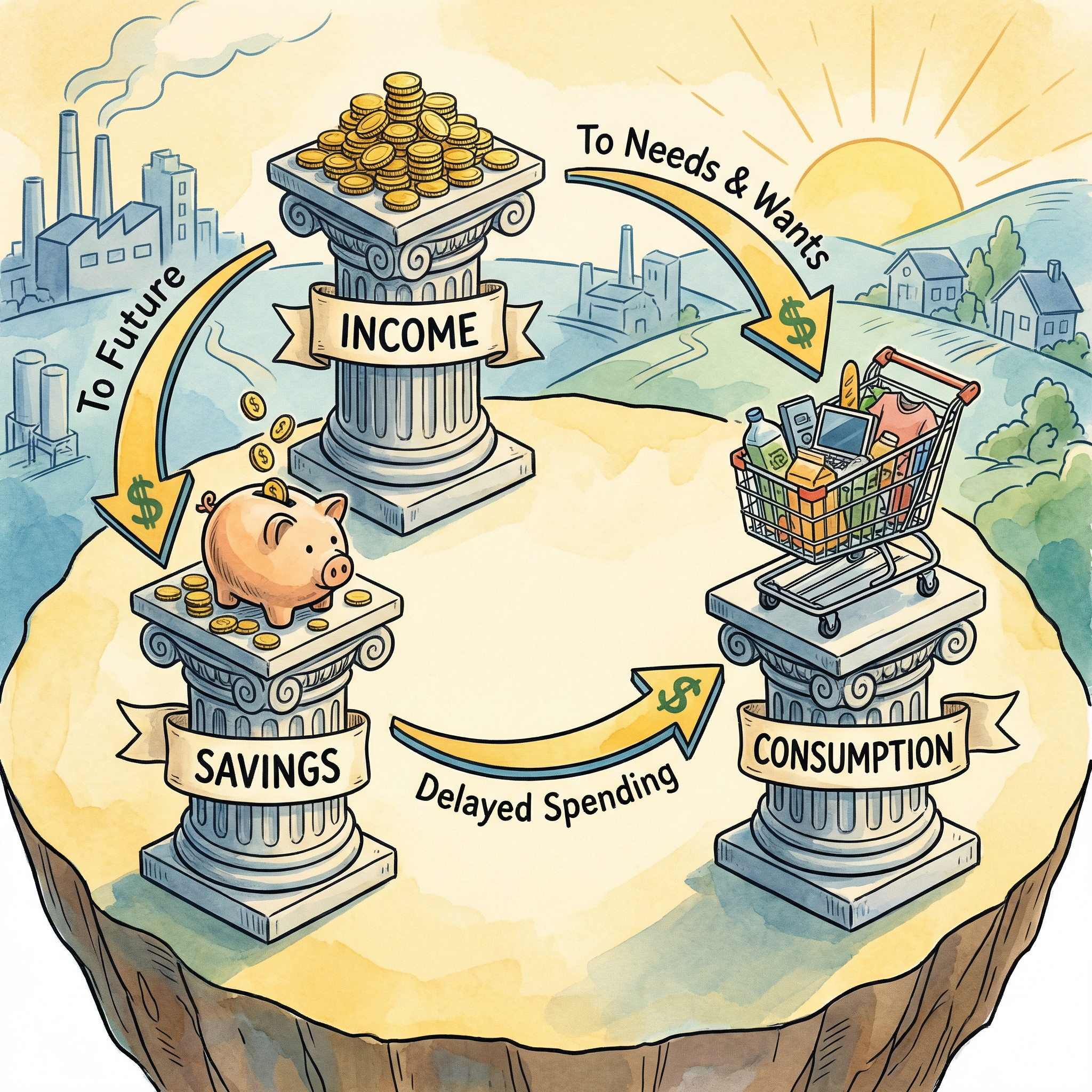
The 50-30-20 Rule: A Simple Starting Point
Not sure where to begin? Try this classic framework:
- 50% Needs — Rent, groceries, utilities, insurance, loan EMIs
- 30% Wants — Dining out, entertainment, shopping, hobbies
- 20% Savings & Debt Repayment — Emergency fund, investments, extra loan payments
It's not rigid law—adjust to your reality—but it's a solid baseline.
Common Excuses (and Why They Don't Hold Up)
| Excuse | Reality Check |
|---|---|
| "I don't earn enough to save." | Start with ₹500. The habit matters more than the amount. |
| "I'll start when I make more." | Lifestyle inflation is real—higher income rarely feels like "enough." Start now. |
| "It's too complicated." | A pen, paper, and 30 minutes can get you started. Apps make it even easier. |
| "I'm young; I have time." | Compound interest rewards early starters dramatically. A 25-year-old investing ₹5,000/month beats a 35-year-old investing ₹10,000/month by retirement. |
Quick-Start Checklist
- List all income sources
- Track every expense for one month (apps like Walnut or Money Manager help)
- Categorize spending into needs, wants, and savings
- Set one short-term goal (3–12 months) and one long-term goal (5+ years)
- Automate savings—transfer to a separate account the day salary hits
- Review and adjust quarterly
The Bottom Line
Financial planning isn't about deprivation. It's about intention. It's choosing the life you want instead of stumbling into whatever's left over.
You don't need to be a numbers person. You don't need to earn six figures. You just need to start—one decision, one rupee, one month at a time.
"It's not your salary that makes you rich; it's your spending habits." — Charles A. Jaffe